You Won’t Believe How Alive Culture Feels in Kolkata
Kolkata doesn’t just preserve culture—it breathes it. From dawn rituals along the Hooghly River to spontaneous poetry readings in old bookstores, every corner pulses with creative energy. I didn’t expect to feel so connected—to strangers, to stories, to history—until I wandered through its alleys. This city isn’t about sightseeing; it’s about feeling heritage. If you crave real cultural immersion, Kolkata answers the call.
The Soul of the City: Kolkata’s Living Cultural Identity
Kolkata’s cultural heartbeat is not confined to museums or festivals—it echoes in the everyday. More than any other Indian metropolis, Kolkata wears its intellectual and artistic soul on its sleeve. The city’s identity was deeply shaped during the 19th-century Bengal Renaissance, a period of social reform, literary innovation, and philosophical awakening that redefined Indian thought. Figures like Raja Ram Mohan Roy, Ishwar Chandra Vidyasagar, and later Rabindranath Tagore championed education, humanism, and artistic expression, laying a foundation that still informs the city’s spirit today. Walk into a neighborhood tea stall, and you might overhear a debate about poetry or politics as naturally as one would discuss the weather. This reverence for ideas is not performative; it is woven into the fabric of daily life.
Art and literature are not luxuries in Kolkata—they are necessities. The city produces more books per capita than any other in India, and its people read with passion. From university students poring over philosophy at College Street’s pavement stalls to elderly men reciting Tagore in quiet parks, the love for words is palpable. Street artists paint murals inspired by folk tales and revolutionary poets, while theater groups stage performances in community halls with no expectation of profit, only purpose. The influence of the Bengal Renaissance lives on not as a historical footnote, but as a living dialogue between past and present. Intellectual curiosity is celebrated, and creative expression is seen as a civic duty rather than a pastime.
What sets Kolkata apart is its deep respect for creators. Poets, painters, and playwrights are not marginalized—they are honored. Statues of literary figures stand in traffic circles; metro stations are named after composers; and book launches draw crowds like film premieres. This cultural ecosystem thrives because it is participatory. You don’t need a degree to join a poetry circle or critique a painting at a local gallery. Everyone is invited. In a world where art is often commodified, Kolkata reminds us that culture belongs to the people. It is not something to be consumed, but something to be lived, questioned, and reshaped with each generation.
Morning Rhythms: Experiencing Tradition Along the Ganges
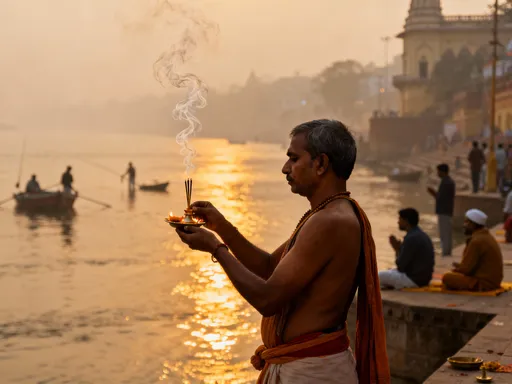
There is a quiet magic in Kolkata at dawn, when the city stirs not to the sound of traffic, but to the rhythm of devotion. Along the banks of the Hooghly River—a distributary of the sacred Ganges—the ghats come alive with ritual and routine. At Babu Ghat and Ahilyabai Holkar Ghat, the morning light spills golden over the water as priests light oil lamps, chant mantras, and offer flowers in the daily arati ceremony. The air carries the scent of sandalwood and marigolds, mingling with the damp earth and river mist. This is not a tourist spectacle; it is a deeply personal act of faith, repeated with quiet consistency by generations of families who have lived along the river’s edge.
As the sun rises, the ghats transform into spaces of both worship and work. Fishermen haul in their nets, their hands moving with practiced ease, while others bathe in the cool waters, believing in the river’s purifying power. Women in cotton saris perform surya namaskar, their movements synchronized with the rising sun. Sadhus in saffron robes sit in meditation, their presence a reminder of the spiritual undercurrent that flows through the city. Children run barefoot across the steps, chasing each other between clusters of worshippers and laundry lines. There is no separation between the sacred and the mundane—prayer, fishing, washing clothes, and morning exercise all unfold side by side, each part of the same rhythm.
Visitors are not excluded from this world; they are gently included. A priest may offer you a lamp to float on the water, or an elderly woman might smile and gesture for you to join her in a quiet moment of prayer. No one expects payment for these gestures—they are acts of shared humanity. The Hooghly, though visibly affected by urban life, remains a source of spiritual and emotional nourishment. To witness these morning rituals is to understand that in Kolkata, tradition is not preserved behind glass. It is lived, renewed every day, and open to anyone willing to pause, observe, and participate with respect.
Cultural Hubs: Iconic Spaces That Keep Art Alive
Kolkata’s cultural richness is sustained by institutions that are both historic and vibrantly active. These are not relics of a bygone era, but dynamic centers where art, music, and performance continue to thrive. The Indian Museum, established in 1814, is one of the oldest and largest in Asia, housing vast collections of archaeology, anthropology, and natural history. But it is not just a repository of the past—its galleries regularly host educational programs, school tours, and thematic exhibitions that engage modern audiences. Families spend Sunday afternoons wandering its halls, children peering into glass cases with wide eyes, while scholars study ancient manuscripts in its reading rooms.
Equally vital is the Academy of Fine Arts, a cornerstone of Kolkata’s visual art scene. Founded in 1933, it provides a platform for both established and emerging artists to exhibit their work. Unlike elite galleries that cater to collectors, this space is accessible to all. Admission is nominal, and visitors often find artists standing beside their paintings, eager to discuss their inspiration. The academy also hosts workshops, artist talks, and children’s art camps, ensuring that creativity is nurtured across generations. Its annual art fair draws thousands, transforming the building into a bustling hub of color, conversation, and critique.
Then there is Rabindra Sadan, a cultural complex named after Rabindranath Tagore, which serves as a home for theater, dance, and music. Every evening, its auditoriums come alive with performances—classical Indian dance, Bengali plays, and experimental theater. Tickets are affordable, and audiences are diverse, ranging from elderly couples in traditional attire to young students with notebooks in hand. The complex also houses the Nandan cinema center, which screens independent and international films, fostering a culture of cinematic appreciation beyond commercial cinema. These institutions do not exist in isolation—they are interconnected, often collaborating on festivals and outreach programs. Together, they form a cultural ecosystem that is both resilient and inclusive, proving that art in Kolkata is not a luxury, but a public good.
Festivals That Transform the Streets: Durga Puja and Beyond
If there is one time of year when Kolkata’s cultural energy reaches its peak, it is during Durga Puja. This five-day festival, usually in September or October, transforms the entire city into a living canvas of art, devotion, and community. Elaborate temporary structures called pandals rise in every neighborhood, each one a masterpiece of design and imagination. Some are built around social themes—environmental conservation, gender equality, or historical events—while others recreate famous landmarks or mythological scenes. Lighting, sound, and sculpture come together to create immersive experiences that draw millions of visitors from across India and abroad.
But Durga Puja is more than a visual spectacle. It is a deeply communal event. Families prepare for months, contributing money, time, and skills to their local pandal committee. Neighbors who may not speak during the year come together to cook, decorate, and welcome guests. The air fills with the scent of incense, fried snacks, and sweet rice. At night, the city glows with fairy lights, and cultural programs—dance, music, and drama—take place in every corner. The final day, Vijaya Dashami, sees emotional processions as idols are carried to the river for immersion, accompanied by drumming, singing, and tears of farewell. It is a celebration of victory, but also of letting go.
Durga Puja is the most prominent, but it is not the only festival that defines Kolkata’s cultural calendar. Poila Boishakh, the Bengali New Year in April, brings colorful processions, traditional music, and the exchange of sweets. Kali Puja, celebrated in autumn, illuminates the city with rows of earthen lamps and grand fireworks. Even smaller observances, like Saraswati Puja in schools and colleges, become occasions for students to honor knowledge and creativity. These festivals do not merely mark time—they redefine space. Streets become stages, parks become galleries, and homes become gathering places. In Kolkata, celebration is not passive; it is participatory, inclusive, and deeply meaningful.
Literary Kolkata: Where Books and Ideas Never Sleep
No city in India celebrates literature quite like Kolkata. Here, books are not hidden away in private libraries—they spill onto sidewalks, fill coffee houses, and fuel late-night conversations. College Street, officially known as Bidhan Sarani, is the epicenter of this literary culture. Its pavement bookstalls stretch for blocks, offering everything from rare philosophical texts to second-hand novels in English, Bengali, and other languages. Students, scholars, and curious travelers browse for hours, flipping through pages, haggling over prices, and discovering forgotten gems. The air smells of old paper and dust, but also of possibility.
Nearby stands the Indian Coffee House, a colonial-era establishment that has long been a meeting place for intellectuals, artists, and activists. Its wooden booths and ceiling fans evoke a bygone era, but the conversations are thoroughly modern. Poets recite their latest verses in corner booths, students debate politics over steaming cups of tea, and retired professors correct grammar in newspapers. This is not nostalgia—it is continuity. The Coffee House is not a museum; it is a living forum where ideas are exchanged freely and passionately. Similar literary gatherings happen in smaller cafes across North and South Kolkata, where poetry readings and book launches draw intimate but dedicated crowds.
The legacy of Rabindranath Tagore looms large, but Kolkata’s literary culture is not stuck in the past. Contemporary Bengali writers like Sunil Gangopadhyay, Mahasweta Devi, and Srijato continue to inspire new generations. Publishing houses, both large and independent, operate out of the city, producing works that reach national and international audiences. Literary festivals, such as the Kolkata Literary Meet, attract authors from around the world, yet maintain a distinctly local flavor. In a digital age where reading is often solitary, Kolkata reminds us that literature is also a social act—a shared journey of thought, emotion, and imagination.
Culinary Culture: More Than Just Food—It’s a Tradition
In Kolkata, every meal tells a story. The city’s cuisine is a reflection of its layered history—Bengali home cooking, Mughlai influences, colonial legacies, and immigrant traditions all come together on the plate. To eat in Kolkata is not just to satisfy hunger, but to experience culture through flavor. Street food is an essential part of this tapestry. At dawn, vendors set up stalls selling mishti doi—sweet, creamy yogurt in earthen pots—that have been made the same way for generations. By midday, the air fills with the tangy burst of puchka, the city’s beloved version of pani puri, served with spicy tamarind water and mashed potatoes.
One cannot speak of Kolkata’s food without mentioning its sweets. Rasgulla, ledikeni, and chomchom are not just desserts—they are cultural icons. Sweet shops like K.C. Das, Nakur Chandra Nandy, and Ghosh & Sons have been operating for over a century, their recipes passed down through families. Watching a sweet maker shape syrup-soaked cheese into perfect spheres is like witnessing a culinary ritual. These shops are busiest during festivals, when families place bulk orders for offerings and celebrations. But even on ordinary days, locals stop by for a small treat, treating sweetness as a daily necessity rather than a luxury.
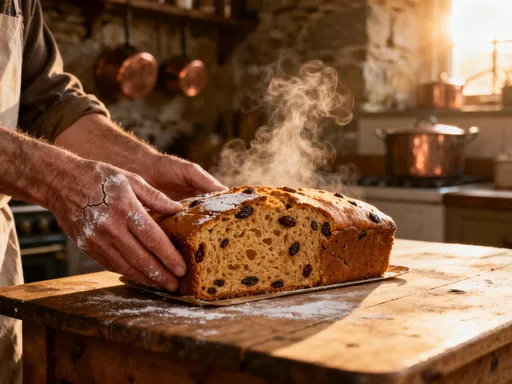
Then there are the old-world restaurants—bhadralok eateries that serve traditional Bengali thalis with shorshe ilish (hilsa fish in mustard sauce), cholar dal, and steamed rice. Places like Mocambo, Shiraz, and Peter Cat carry the charm of mid-20th-century Kolkata, with white tablecloths, silver cutlery, and waiters in crisp uniforms. Even the city’s bakeries, influenced by Portuguese and Armenian settlers, offer unique treats like puff pastries and neuro bread. Food in Kolkata is not rushed. Meals are lingered over, shared with family, and often accompanied by conversation. It is a cuisine of memory, identity, and warmth.
Off-the-Beaten-Path: Hidden Cultural Encounters
Beyond the well-trodden tourist routes, Kolkata offers quieter, more intimate cultural experiences. These moments may not be photographed as often, but they are often the most memorable. One such experience is attending a kavigan, a traditional folk singing duel where poets improvise verses in rhythmic competition, accompanied by drums and harmonium. Held in neighborhood courtyards or temple grounds, these events are spontaneous and deeply rooted in oral tradition. The audience claps along, shouts encouragement, and laughs at witty wordplay. It is performance as community celebration, not entertainment for outsiders.
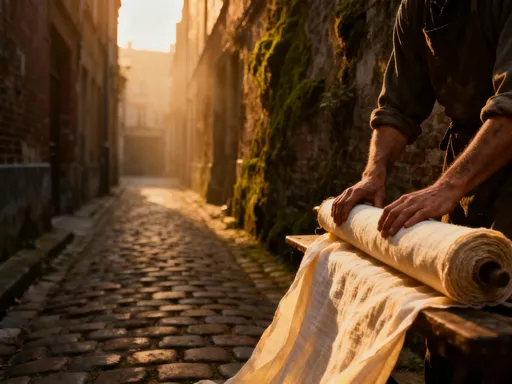
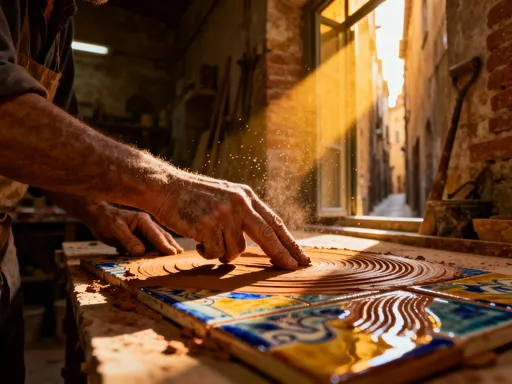
Another hidden gem is the handloom district of Shovabazar, where weavers still work on wooden looms, crafting intricate tant saris using techniques passed down for generations. Visitors can watch the process, learn about natural dyes, and even try their hand at weaving. These artisans are not performing for tourists—they are preserving a way of life. Supporting them by purchasing a sari or shawl is not just shopping; it is an act of cultural preservation. Similarly, a quiet evening at a satsang—a community gathering for devotional songs and spiritual discourse—offers a glimpse into the city’s inner life. Held in homes or small temples, these gatherings are open to all, regardless of background.
For those seeking deeper engagement, joining a local walking tour led by resident historians or artists can reveal layers of history invisible to the casual observer. These guides share stories of forgotten buildings, neighborhood legends, and cultural shifts over time. The best times to experience Kolkata are during the cooler months, from October to February, when the weather is pleasant and festivals are in full swing. Public transport, including the metro and trams, is reliable and affordable, making it easy to explore without a car. Visitors should dress modestly, remove shoes when entering religious spaces, and always ask permission before photographing people. Respect goes a long way in building trust and opening doors to authentic experiences.
Kolkata’s culture isn’t displayed behind glass—it’s lived, shared, and constantly reimagined. Travelers who slow down and listen discover a city that doesn’t perform heritage but is heritage. To visit Kolkata is not to observe culture, but to become part of it—even if just for a moment.