Colombo’s Pulse: Where Art Meets Soul on Every Street Corner
You know that feeling when a city just vibrates with creativity? Colombo, Sri Lanka, hit me like a burst of color and rhythm I never expected. It’s not just about temples and tea—it’s living art, from murals that tell stories to drumbeats echoing through alleyways. This is culture you don’t just see; you feel it in your chest. I wandered, listened, and connected—this is real, raw, and absolutely unforgettable. Colombo doesn’t present itself as a polished destination. Instead, it reveals itself slowly, in fragments: a hand-painted rickshaw vanishing into traffic, the distant echo of a drum rehearsal, a silk sari catching the breeze like a flag of quiet pride. For travelers seeking depth, authenticity, and soul, Colombo offers a rare kind of journey—one where every corner pulses with the heartbeat of a resilient, creative people.
First Impressions: Beyond the Postcard
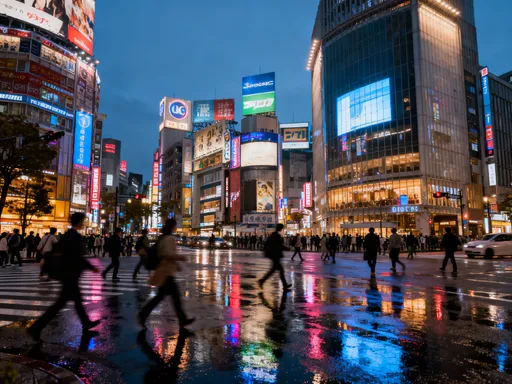
Arriving in Colombo after a long flight, I expected the usual urban chaos—honking traffic, heat, and the disorientation of a new place. What I didn’t expect was beauty in the details. The city doesn’t shout; it whispers. From the moment I stepped out of the taxi, the air carried the faint scent of jasmine garlands draped over temple gates and the tang of diesel mixed with frangipani blossoms. The skyline was a blend of colonial-era buildings with arched verandas, their white paint peeling in the tropical humidity, standing shoulder to shoulder with sleek glass towers that reflected the Indian Ocean’s shimmer.
Colombo’s charm lies in its contradictions. In Pettah, the bustling market district, narrow lanes overflow with spice sacks, brass bells, and bolts of bright fabric. Rickshaws painted in neon blues and fiery reds weave through traffic with surprising grace, their drivers calling out greetings in Sinhala and Tamil. Above the chaos, Vesak lanterns—delicate paper constructions shaped like lotus flowers—sway gently in the breeze during festival season, casting soft, patterned light onto the streets below. These aren’t tourist decorations; they’re part of daily life, symbols of peace and reflection woven into the urban fabric.
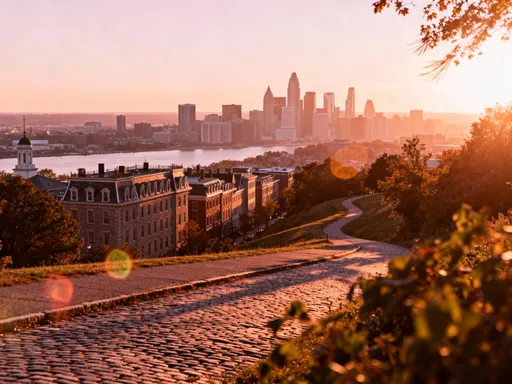
The city’s layered history is visible in its architecture and rhythms. The Portuguese arrived in the 16th century, followed by the Dutch, then the British, each leaving traces in the city’s streets and structures. The Dutch Hospital, now a dining and cultural precinct, retains its original arched corridors and coral-stone walls, but today it hums with the clink of wine glasses and live acoustic music. This blending of old and new isn’t forced—it’s organic, like vines growing over ancient stone. Colombo doesn’t erase its past; it lives inside it. And in that coexistence, there’s a kind of artistic harmony that feels both accidental and intentional.
Walking through neighborhoods like Cinnamon Gardens or Bambalapitiya, I noticed how greenery softens the city’s edges. Giant rain trees provide shade over colonial bungalows, and bougainvillea spills over wrought-iron gates in bursts of magenta and gold. Even in the busiest zones, nature insists on being part of the story. That balance—between urban energy and natural calm—creates a rhythm that’s easy to fall into. It’s not the polished perfection of a postcard. It’s real. And because of that, it’s unforgettable.
Galleries That Speak: Contemporary Art in a Traditional Context
While Colombo’s streets pulse with informal creativity, its galleries are where Sri Lankan art speaks with intention. I began my exploration at the Saskia Fernando Gallery, one of the city’s most respected spaces for contemporary art. Located in a restored colonial building, the gallery feels like a sanctuary—cool, quiet, and filled with light. The works on display weren’t just visually striking; they carried weight. One painting showed a woman in a traditional Kandyan sari standing in front of a cracked wall, her face half-lit, half-shadowed. The artist, I learned, was exploring the tension between cultural preservation and modern identity in postwar Sri Lanka.
What struck me most was how often artists draw from tradition to speak about the present. Motifs from Kandyan dance, temple murals, and folk tales are reimagined in bold colors and abstract forms. A sculpture made from repurposed brass temple bells spoke to both loss and resilience. Another series used fragments of old saris to create textile art that felt like a patchwork of memory. These weren’t museum relics—they were living conversations about who Sri Lankans are and who they’re becoming.
At Paradise Road Galleries, housed in a converted 1920s bungalow, the atmosphere was equally intimate. The space doubles as a design store and exhibition hall, blending fine art with everyday beauty. I met a young artist there who had trained in Colombo and London. Her work combined traditional batik patterns with digital print techniques, creating pieces that felt both rooted and forward-looking. She told me that many Sri Lankan artists today are asking the same question: How do we honor our heritage without being trapped by it?
These galleries aren’t just for collectors or critics. They’re open, welcoming spaces where locals and visitors alike can pause and reflect. I saw families walking through exhibitions, children pointing at colorful paintings, elders nodding slowly at familiar symbols. Art here isn’t isolated from life—it’s part of it. And that accessibility makes the experience all the more powerful. In a world where contemporary art can feel cold or exclusive, Colombo’s galleries offer warmth, honesty, and a deep sense of belonging.
Street Art with a Story: Murals as Urban Dialogue
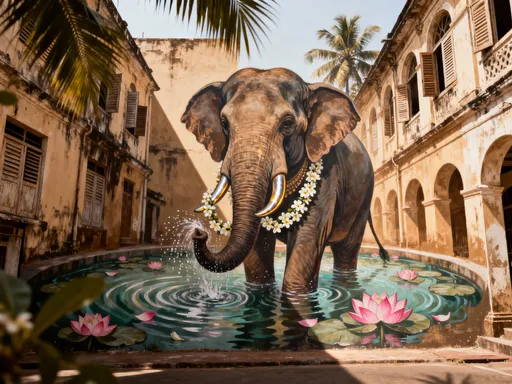
If galleries are the city’s quiet conversations, its street art is the public shout—bold, unfiltered, and full of meaning. In neighborhoods like Slave Island and Fort, murals cover entire walls, transforming dull concrete into storytelling canvases. These aren’t random graffiti tags. They’re carefully painted works with messages about peace, memory, and hope. One mural in Slave Island shows a giant elephant wading through a lotus pond, its skin painted with traditional patterns. The artist, a local known only as ‘Saman,’ told me the piece was about gentle strength—how Sri Lanka, like the elephant, carries its history with dignity.
Another mural, near the old Dutch Canal, depicts children flying kites over a landscape that blends war ruins with blooming trees. The colors are bright, almost joyful, but the message is complex. It’s a reminder of the civil war that ended in 2009 and the long process of healing that continues. Street art in Colombo doesn’t shy away from hard truths. Instead, it wraps them in beauty, making them easier to see, to feel, to remember. These murals are acts of reclamation—turning neglected spaces into places of reflection and dialogue.
What makes Colombo’s street art unique is its collaborative spirit. Many projects are community-driven, with artists working alongside residents to create pieces that reflect local stories. In one Fort neighborhood, I watched a group of teenagers help paint a mural of a traditional dancer, her arms raised in a gesture of blessing. An older man stood nearby, offering advice on the accuracy of the costume. It wasn’t just art-making; it was cultural transmission in real time.
Walking through these neighborhoods, I realized that street art here serves a purpose beyond aesthetics. It’s a form of urban therapy, helping the city process its past and imagine its future. And for visitors, it offers a way to engage with Sri Lankan life on a deeper level. You don’t need a guidebook to understand a mural of a child releasing a paper lantern into the sky. You feel it. That’s the power of art in Colombo—it speaks directly to the heart.
Rhythm of the City: Experiencing Traditional Music and Dance
No visit to Colombo is complete without hearing its rhythm. One evening, I attended a bharatanatyam performance at the Nelum Pokuna Mahinda Rajapaksa Theatre, a modern cultural center with excellent acoustics and seating. The dancer moved with precision and grace, her fingers forming intricate mudras—hand gestures that tell stories from Hindu epics. Each movement was a sentence, each sequence a paragraph in a silent narrative. The music, driven by tabla, violin, and vocals, rose and fell like breath. I didn’t understand every symbol, but I felt the emotion—devotion, longing, triumph.
Days later, the rhythm found me in a more spontaneous way. Near Galle Face Green, as the sun dipped below the ocean, a group of young men began a drumming circle. They played traditional Kandyan drums—long, barrel-shaped instruments slung over their shoulders, beaten with curved sticks. The sound was deep, resonant, almost primal. Passersby stopped to listen. A few children clapped along. I sat on the grass, letting the beat vibrate through my chest. It wasn’t a performance for tourists. It was joy, shared freely.
Curious, I signed up for a short drumming workshop at a local cultural center. The instructor, a retired performer named Ravi, was patient with my clumsy hands. He explained that Kandyan drumming isn’t just about rhythm—it’s about energy, about connecting body and spirit. Each beat has a name, a purpose. The low thud is called ‘thitha,’ the sharp slap ‘ge.’ As I struggled to keep time, Ravi smiled. “It’s not about perfection,” he said. “It’s about presence.”
That phrase stayed with me. So much of Colombo’s art—whether dance, music, or craft—is about presence. It’s not performed for applause. It’s lived. In that workshop, I wasn’t just learning to drum. I was being welcomed into a tradition, one beat at a time. The warmth of the artists, their willingness to share, transformed my understanding of culture. It’s not something you observe from a distance. It’s something you enter, with both hands and an open heart.
Craft Markets and Hidden Studios: Finding Authenticity
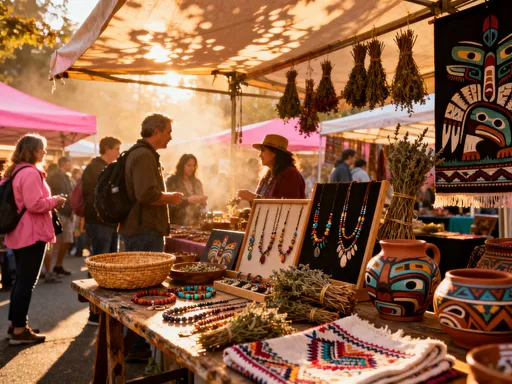
For those seeking authentic souvenirs, Colombo offers more than generic trinkets. The Odel Handloom Collection, founded by a pioneering Sri Lankan designer, is a haven for traditional textiles. Here, you’ll find handwoven sarongs, batik scarves, and linen shirts dyed with natural pigments. Each piece is labeled with the artisan’s name and village, creating a direct link between maker and wearer. I bought a batik cushion cover with a pattern of peacocks—symbols of grace and renewal. The shopkeeper explained that each curve in the bird’s tail represents a different aspect of life’s journey.
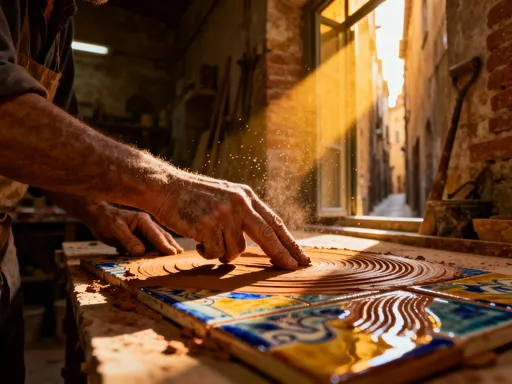
But the real treasures are found beyond the boutiques. I visited a small craft cooperative in Ratmalana, where women from rural villages come to work and sell their creations. In a sunlit room, I watched a woman dip a metal stylus into hot wax, drawing delicate waves onto cotton fabric. This is the batik process—wax-resist dyeing, passed down through generations. She told me the waves represent the flow of life, always moving, never still. Buying her work wasn’t just shopping. It was supporting a livelihood, preserving a craft, honoring a story.
Another day, I traveled to a studio that imports wooden masks from Ambalangoda, a town famous for its ritual mask-making. These aren’t Halloween costumes. They’re sacred objects, used in traditional healing dances to ward off evil spirits. The carvings are detailed—fanged demons, serene deities, comic characters with bulging eyes. Each mask has a purpose, a history. The studio owner explained that fair-trade partnerships allow artisans to earn fair wages while keeping their traditions alive. By buying from such places, travelers contribute to cultural sustainability.
These experiences reminded me that art isn’t only what hangs on walls. It’s in the hands of those who make it, the stories they carry, and the lives they sustain. In Colombo, every purchase can be an act of connection. When you choose authenticity over mass production, you don’t just take something home. You bring a piece of someone’s soul with you.
Sacred Spaces as Living Art
No discussion of Colombo’s art would be complete without its temples. Gangaramaya Temple, nestled along the Beira Lake, is more than a place of worship. It’s a living museum, a gallery of devotion. The entrance is marked by a massive moonstone—a carved slab worn smooth by centuries of bare feet. Stepping onto it feels like crossing a threshold into another world. Inside, the temple is a feast for the senses: golden Buddha statues, intricate wood carvings, offerings of lotus flowers and flickering oil lamps.
One corner houses a room filled with hundreds of Buddha statues, each slightly different—some serene, some laughing, some deep in meditation. Another displays a ceremonial elephant howdah, inlaid with ivory and silver, used during religious processions. But the most moving moments were the quiet ones: a monk reading sutras beneath a bodhi tree, the reflection of lotus lamps in a still pool, an elderly woman pressing her forehead to the floor in prayer. These aren’t staged scenes. They’re daily acts of faith, unfolding in a space that blends art and spirituality seamlessly.
I visited during Vesak, the festival celebrating the birth, enlightenment, and passing of the Buddha. The temple grounds were lit with thousands of lanterns, their colored paper glowing like jewels. Children ran through the halls, holding paper lanterns shaped like stars and lotuses. Monks distributed rice and curry to visitors. The air hummed with chanting and the scent of incense. In that moment, the temple wasn’t just a building. It was a living heart, beating with community, culture, and continuity.
Respectful observation is key. Visitors are asked to remove shoes, dress modestly, and speak quietly. These rules aren’t barriers—they’re invitations to slow down, to be present. In a world that moves too fast, sacred spaces like Gangaramaya offer a rare gift: stillness. And in that stillness, art isn’t just seen. It’s felt, breathed, lived.
Why Colombo Changes You: Culture as Connection
Leaving Colombo, I realized something had shifted. I hadn’t just seen art. I had lived inside it. From the murals on cracked walls to the drumbeats on the shore, from the quiet focus of a batik artist to the grace of a temple dancer, I had been invited into a world where creativity isn’t separate from life—it is life. This isn’t tourism as checklist. It’s travel as transformation.
Colombo doesn’t offer easy answers or polished experiences. It offers something better: authenticity. It asks you to look closely, to listen deeply, to feel fully. In doing so, it reminds you that culture isn’t a performance for outsiders. It’s a daily practice, a shared inheritance, a way of being. And when you engage with it respectfully, you don’t remain a tourist. You become, however briefly, part of the story.
For women in their thirties to fifties—mothers, travelers, seekers of meaning—Colombo offers a rare kind of nourishment. It’s not about luxury or escape. It’s about connection. It’s about remembering that beauty exists in resilience, that art can heal, that a city’s soul can be felt in the palm of your hand. So if you’re ready to move beyond the surface, to let a place rewrite your expectations, go to Colombo. Walk its streets. Listen to its rhythms. Let its art touch your soul. You’ll return home not just with souvenirs, but with a quieter heart, a deeper gaze, and the unshakable sense that you’ve been somewhere true.